meat: LOVES, Joseph Wolfgang
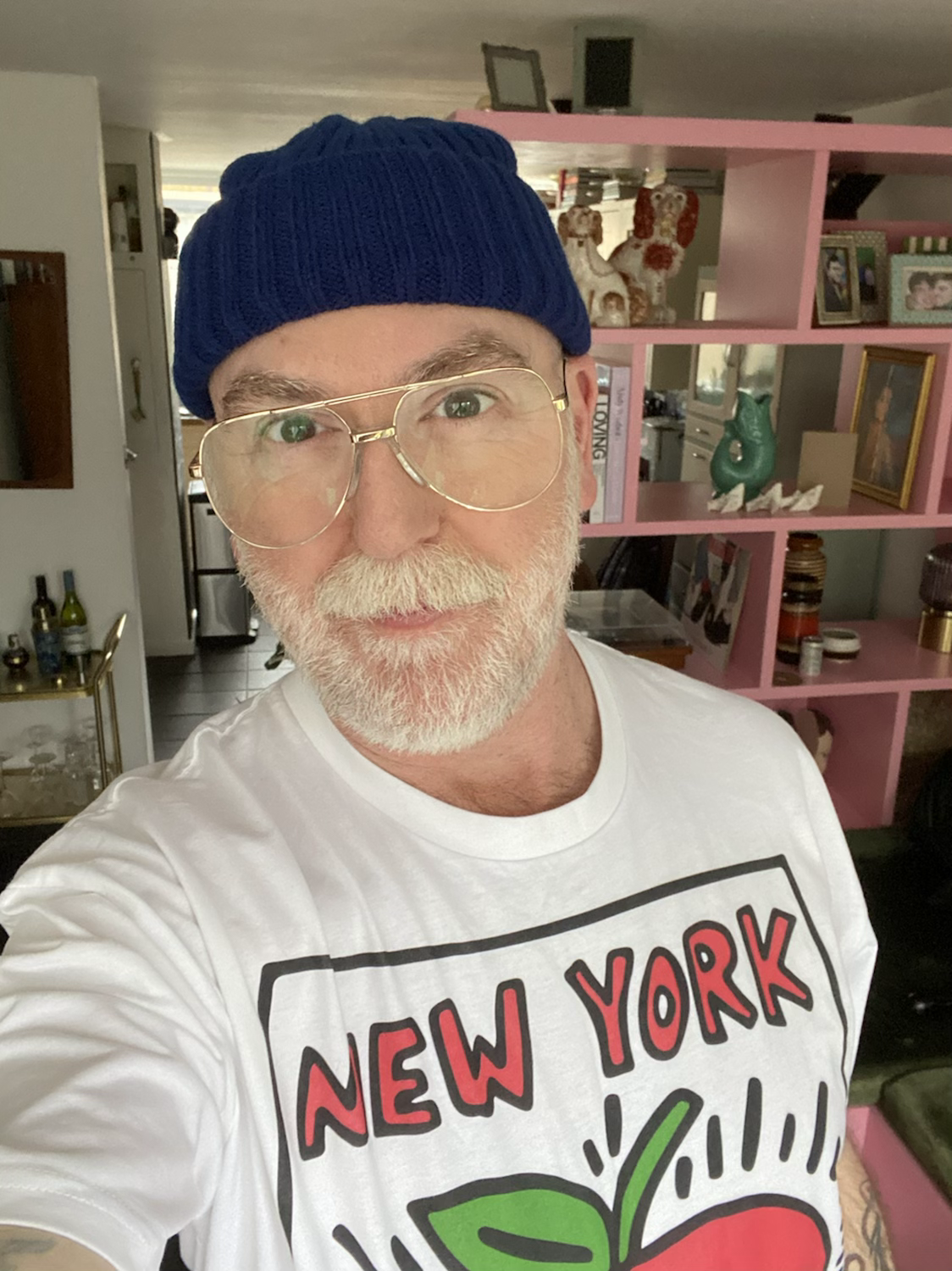
Meet photographer Joseph Wolfgang Ohlert as we discuss his new photobook, Bigger.

Joseph is a Munich based queer photographer. In his new book, Bigger, he portrays the diverse spectrum of male bodies in an intimate and tender manner. A curation of photography and essays from five writers, it is a representation of men from his homelands of Munich and Berlin - where he studied and lived for a number of years - and his travels across Europe.
Dan Facetimed with Joseph as he was driving home from the Christmas markets in Munich with his Dad. They discussed body image and expression, the influences and intentions in Joseph’s work, and his upcoming trip to London to exhibit some of his photographs in collaboration with Friend of Dorothy at The Ministry, Southwark on November 25th.
Dan: Joseph, so nice to speak to you! Thanks for taking the time. You began your creative life as a set designer. What was it that drew you to photography from that world?
Joseph: I always knew I wanted to do something creative. Doing art was so obvious for me that I kinda was against it. So I looked at the theatre and movie business. I wanted to be a movie star, really. But I just wanted to do something creative. I also wanted to go to Berlin and eventually got accepted for an internship as a set design assistant. It’s so much effort you put into a theatre play, and at the end it’s only seen by a small number of people, and I wanted a wider reach.
Then I started to do some work in movie productions, in front of the camera and behind, which was when I started to think about art university. I’d started photographing my friends when partying, and created a portfolio to apply with. They eventually accepted me, but not the first time. Photography was the fastest way I could produce what I was feeling, and it kind of stuck, and I experimented a lot initially.

It’s also a great way to meet people - you move to a city and you’re looking to hang out with people, and photographing them is a good way to make friends. I thought, like, “hey, can I take a photo?” And everyone wants to be photographed more or less. You know? But I only really wanted to photograph people I was interested in, not just models, but real everyday people.
Dan: Were there any particular influences within your work, in the photography world or beyond? Is there anything that really inspires you to do the kind of work you do or that has made you grow into the artist you’ve become?
Joseph: I called them my “big five”, from my early years. The main one, of course, was Wolfgang Tillmans. The way he took photos, very diary style, but also very conceptual. He was a big, big influence.
Then there's Walter Pfeiffer, from Switzerland. He's not so well known, but in the inner circle he's a name. He got successful very late, so he didn't have much time to shine like he deserves. I got to know him when I moved to Berlin. We went to shoots together, and I introduced him to friends he photographed. He's eighty-something now. Very sweet guy, a little diva, but very precious. I love him so much. He had such a playful way of approaching people. He photographed the boy next door, not the obvious beautiful ones or the commercial ones. And he never took himself too seriously, which I really try to have in my work too. My work is a little classic, constructed, but I always want some lightness. Inner strength, but with elegance.
Then Nan Goldin, of course. She was the one doing the diary. Like what people do now with live streams, she just had her camera around her all the time. It's not about one photo. The whole work together gives you a feeling of real, authentic life.
Ryan McGinley was really big then. It was mind-blowing how he got people out and made it so visual. I'm a very visual person, I love that poppy kind of art. Just hanging out, taking pictures and making magic happen.
And Jürgen Teller. Very in-the-moment, don't care too much. Have flaws in your work, don't take it too seriously. Irritate a little bit, put stuff together that doesn't fit. That's what makes it interesting.
Now I have lots more, but those are the core ones. I wish there were more women. Those I only discovered later, when they got more attention.
Dan: Bigger is your new release project that has been in development since 2023, centered around body image of bigger guys, with a focus on the gay world. Can you speak a little bit about what brought you to the creation of this project and why you felt like it was so important to exist?

Joseph: I think I started the idea four years ago, more or less. It took a long time as I had lots of shifting in my life and also moving away from Berlin, so the project paused for a while. It was a very long birth, I was so happy when the baby was out.
I’ve never had a six pack, you know. The older you get, the more you realise, when you look at older photos of yourself, you’re like, “oh my god, I looked so nice”. It’s so crazy because in my mind, I always felt like there’s something missing or I’m not enough and it really made me think about how we see ourselves and how I take photos of others. I photographed a lot of stereotypically “beautiful” boys, and started to think, "why do I not feel enough myself” or am I just serving a typical beauty standard? So it felt like a natural thing.
I started to question too, whenever the photos are of bigger guys, it’s often like in a niche or sexual context. Why does it always have to be fetishised? You know, why can’t we just photograph bigger guys casually and be sexy?
Butt magazine was a big influence back in my younger years. They had a very easy way of being sexy, without trying too much. They were gone when I first started, so I felt something was missing. We needed something like that magazine again.
There was a big body positivity movement, but that was more focused on the girls. But men were kind of still behind. Even more so today with “looks maxing”, “be the best version of yourself” and mass fitness-content stuff on Instagram, people are more and more in this cage of how they have to be. I started to see this all the time and just got bored really.
Even when you say “stop showing me this”, it always finds a way to pop up again. It’s so annoying.
I want to see more people, bigger guys on Instagram. I want to put it in people’s faces to let them see, hey, it can be nice to be a bigger guy. Not super sexual or erotic. Flirty, yes, but without the cliché poses, which were never really my style. I was missing that in the media.
So I decided I’m going to do a big book about it. Now, of course, meat exists, and Butt is back, I feel there needs to be more things that exist though to show bigger guys.
It was also making peace with myself. After I turned thirty, I got more comfortable. In the gay world, from thirty everyone is freaking out. But for me, I really relaxed into myself because I didn’t have to fit in this “be hot and young” thing. I was like, I’m 30 now. I don’t have to be this sexy young dude anymore. Maybe I’m entering my daddy phase.
The book is mostly gay guys, but not all of them. It was hard to find straight people to pose for this project because they didn’t feel sexy. It’s a paradox, they can be so comfortable in their body walking around, then they get super anxious when being photographed, which is such a contrast to the potential feeling of ego you perceive from them sometimes.
The topic is queer of course, but it’s open for everyone. I wanted to make it a project for everyone to see, to read, and feel seen.
Dan: Bigger is a curation of your own photography alongside essays from five writers. Did that assist or impact the storytelling of the project or help to shape the book's narrative in any way?
Joseph: I didn’t want to have just photos in the book. With my first book Gender as a Spectrum, I interviewed people so they could share their perspective. I wanted it to be a collaboration as well as photographs to give it more of an experience.
I’ve always wanted to bring other people in. I feel like it’s a nice thing to collaborate. I’m a wolf guy. I think I need a pack, you know?
I wanted more voices and it would've been too much to interview people, so I found writers who have some shared experiences. And in the end I think we all share them. Even the muscle guys share the same experiences, you know, like body dysmorphia or not feeling seen enough. It’s a universal problem. So it’s good to have other people's points of view to make the whole project experience more reachable.
Dan: When you announced the Bigger project in a 2023 Instagram post, you mentioned noticing an industry shift, even in model scouts looking for guys with bigger bodies and changing representation within the media. Have you seen this shift developing?
Joseph: Not too much. I think we are far from being comfortable in society, so it’s still a topic there. Even with my book, I really had trouble with promotion. I thought it would be a big subject, a kind of perfect reaction to this “looksmaxxing” thing. I thought it would be perfect for magazines and newspapers, but only a few picked it up, and they were the ones I messaged. I had more attention with my gender book, but with my bigger guys the press was less interested. So yeah, I think it’s still a little bit niche.

But maybe that’s the topic. It’s like, people are not comfortable with it. The people on Instagram that leave negative comments about the book. They are just hurt inside. It’s like there are such strict body rules, and once you see someone else breaking those rules and feeling good, then they get mad because they can’t get over those rules themselves. They always have an opinion about it, that it’s not healthy or whatever.
Dan: Yeah, I saw the one that you reposted.
Joseph: I mean, that’s just one little example. Like, it’s not about them. Let people just be. It’s not about being healthy. It’s about feeling good about yourself. You can still change something if you want, you know? It's ok to want to change things about your body, but that shouldn’t be because you feel like a “bad person” or whatever. Yes, go to the gym and strengthen yourself, but that should be to feel good for you.
The “Before and After” trend on Instagram is so annoying too. Some trending audio with a photo of them when they were like, 14 and a chubby kid, next to one of them at 19 when they are a muscular teenager. They’re like, “oh, my life was messy, I was out of control”. A chubby kid seeing that, they think “oh, I’m not enough”, it's just not a good impression to give. It’s a really poisonous, toxic environment. It puts in your head that being a bigger guy, a little bit chubby or if you don’t look like that certain way, you’re not worthy.
Dan: You mentioned your other book, Gender as a Spectrum. How does Bigger fit into the world of the other books you’ve released?
Joseph: At that time (2016) when I was doing the book, there was nothing out there.
Starting the project, I had no idea the difference between a trans woman and a drag queen. I didn’t know. And many people didn’t know, because there was nothing out there, no publications, no proper books, or very niche only. That’s why I started that book.
I made it with a friend of mine, Kaey. She’s a trans person in herself, and was also working in the media and thought something was missing. We had a similar idea at the same time, but she approached me and we decided to make it. We just clicked and found all these people together. I learned so much making this book, about the liberty you can have, how you can see yourself, that you can think out of the box. Live and let live. That there’s more than you can even grasp with your mind. You don’t have to always understand everything. Just let it be without questioning it all the time, who cares? It doesn’t affect me at all.
If you misgender someone, then you just ask how they would like to be called? Just don’t be a jerk. It might feel complicated, but it's really not. The book was meant to remove the mystery and show that it's nothing to be scared of.
I did this book to learn for myself, but also to give this experience to other people, to show them there is more than what you have imagined in your life before.
It got really good press attention and I’m a little bit proud I was one of the first to do that. I was not the first, but in recent times one of them. I did a little part at least.
At the end we just want to leave a mark somewhere. I’m proud of that project and I met so many incredible people and it’s a time capsule of that time, how it was, getting out there, getting seen. Now it’s easier to be seen and to stand up for yourself. But in 2016, it wasn’t quite there yet. My goal is that some day, like in 50 or 100 years, someone finds my book at a flea market or in a library and rediscovers the work. I love to think about that.
Dan: Bigger was primarily shot in Berlin and Munich and guys that live within Germany. Is it also a curation of photography that you’ve taken across the world and throughout your career?
Joseph: For my gender book, I travelled to different countries and would interview people. There was more of a set up. But with Bigger, I often looked for guys on dating platforms and also traveled to different cities and would just see who was around, it was more spontaneous. There's guys from Paris, Venice, and other parts of Italy too. There’s international guys, but mostly when they visited Germany.

Sometimes I’d ask someone and they came over ten minutes later and we had a photo shoot. I prefer that more than having someone prepared because they’re getting more anxious ahead of time. I like spontaneity, just come over and then they’re a little more like, “ok whatever”.
I like those photographs that aren’t too posy, not too shiny. They’re just in the moment.
I wanted to have more inclusivity of people of colour, so I went to Sitges during Bear Week. I just went to the beach to find guys, and was just like, “do you want to take some photographs?”.
I love Sitges because it gives you something I’ve never felt before. I really appreciate what I experienced there. To really feel liberated in your body. I would say I’m confident, but still a little in my head. But in Sitges it was the first time I really completely 100% felt free about myself. That gives me so much power because every time I go to the beach now, I think back to Sitges. You deserve that feeling.
I always say to people, if you feel insecure about your body, go to Sitges Bear Week.
Dan: Very much noted, I’ll add that to my list. You shoot purely on analogue film, do you develop it all yourself as well? Have you got a dark room practice?
Joseph: I learned when I was studying photography, but now it takes so much time, and I’m too impatient. Honestly, I’m always saying I’m a bad photographer because I have no idea what I’m actually doing. I know what a good picture looks like and that's why I orientated toward it. But otherwise, I have the old camera my mother gave me, she was using a very cheap one. You can buy my camera for like 20, 30 euros on eBay. And I like this. I don’t think you need a big expensive camera to take a good picture.
Dan: You’re coming to London next week to exhibit some of your photographs with Friend of Dorothy. How did your partnership begin and how involved have you been with the exhibition? Have you exhibited in London before?
Joseph: I was there a long time ago, just a group thing. They came to me on Instagram, and I thought it was a cool organisation that was very open-minded and with cool projects. They asked if they could show some work from my book and present it. It was very flattering. They’re printing some of the photographs on fabric, which I’ve done in the past and it works really nicely as they’re kind of floating. But really, I’ve sent them the photographs and they’re putting it all together. It’s exciting.
Dan: And what are your plans when you’re coming?
Joseph: One of my only requests with Friend of Dorothy was to come in November, so I can have the Christmas feeling. I want to see the lights on the street and people smiling and looking forward to Christmas time.
Dan: Thank you so much for chatting to me Joseph. It’s been lovely getting to know you. I look forward to meeting you in person next week!
Joseph: It’s been really nice, thank you Dan. See you next week.
You can grab a copy of Joseph’s book, Bigger, at his exhibition in collaboration with Friend of Dorothy tomorrow at The Ministry, Southwark. Limited tickets available here.
Comments